In-House Tooling: Why Die and Mould Capability Changes Your Project
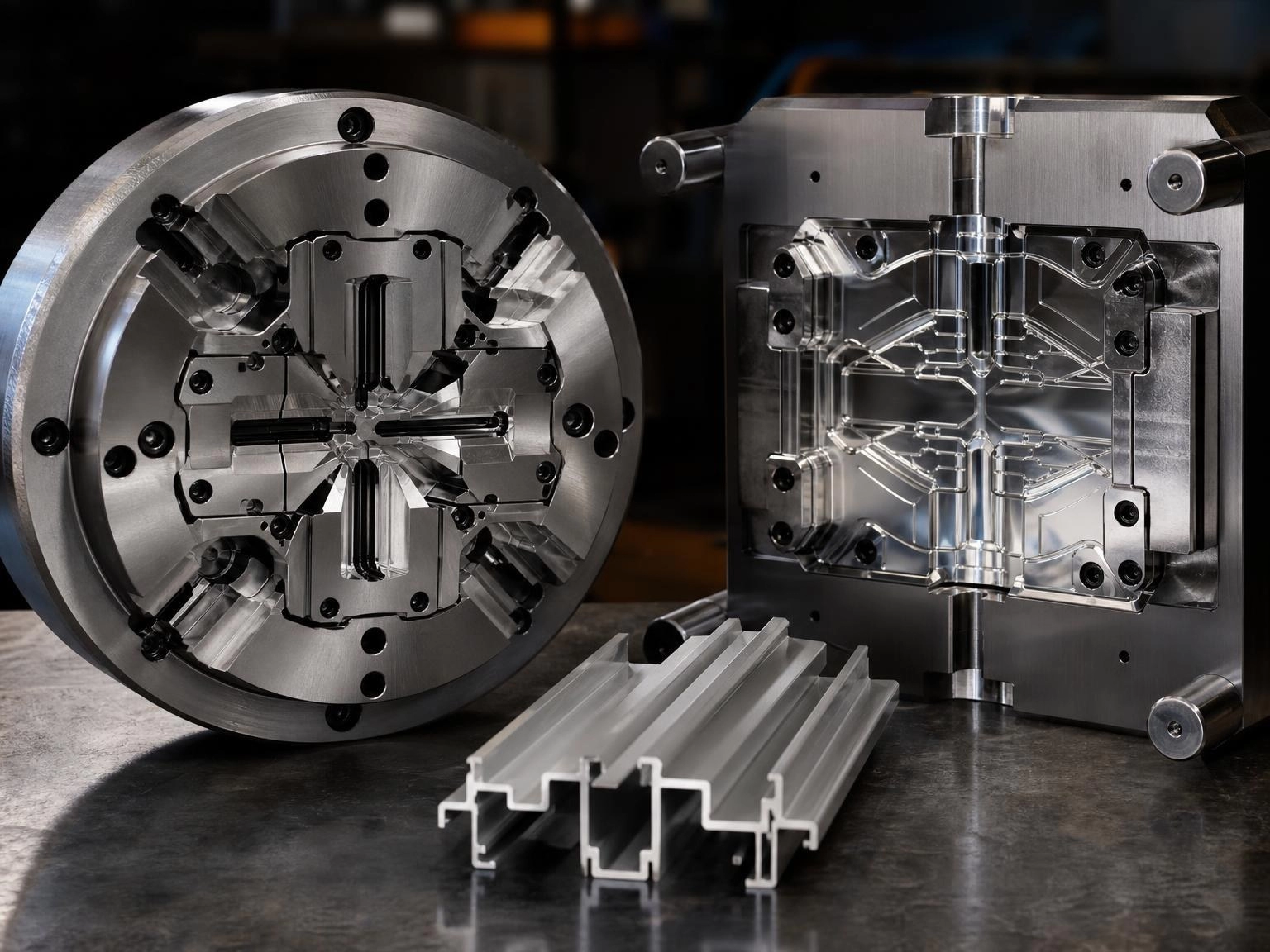
When a manufacturer designs and builds its own extrusion dies and casting moulds, tooling stops being a lead-time bottleneck and becomes an engineering advantage.
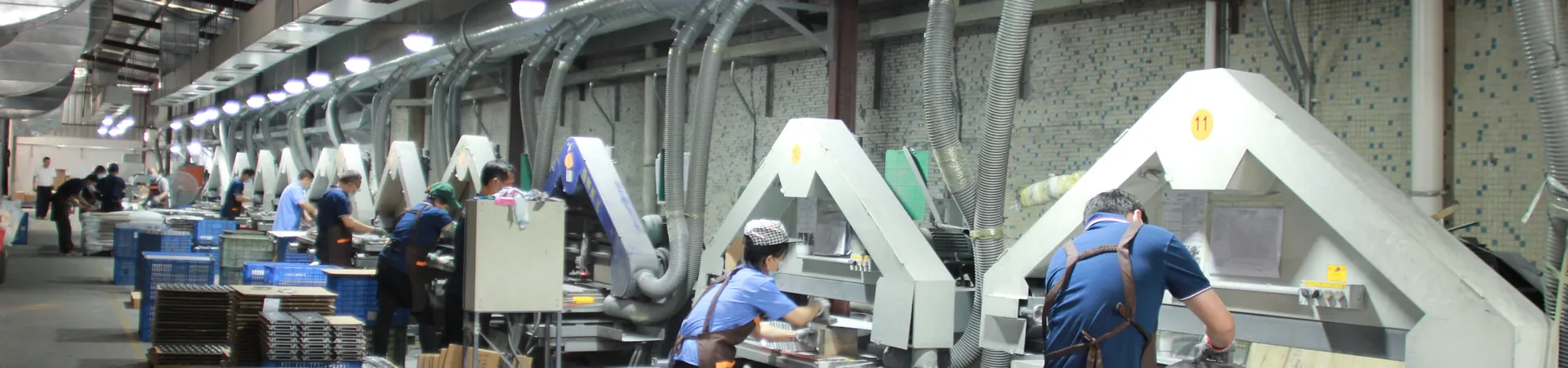
We operate our own tool room. Since our earliest days as a metal stamping workshop, we have designed and built the tooling we run. Here is why that matters to a customer.
Tooling as a schedule risk
For any custom aluminium component, tooling is almost always the longest lead-time item. Material can be ordered, capacity reserved and inspection planned — but production cannot begin until a die or mould exists and has been proven.
When tooling is subcontracted, the manufacturer becomes a project manager for a supplier they do not control. Every revision requires a conversation, a schedule negotiation and a shipment. A die that needs three trials can add weeks.
When tooling is built in-house, the loop is short. A modification identified in a trial happens the same shift. Trial and correction cycle within days rather than weeks.
For a program on a launch deadline, this is often the single largest scheduling advantage available.
Tooling design determines part quality
A die is not a neutral container for a shape. Its design determines whether the part can be produced to specification consistently.
For extrusion, the die controls metal flow. An unbalanced flow causes the profile to curve, twist or develop thickness variation. Bearing length, land geometry and flow balancing are engineering decisions that determine whether the profile runs straight and holds tolerance.
For die casting, the mould controls fill pattern, solidification sequence, porosity location and thermal balance. Gate and runner placement, overflow positioning, cooling channel layout and ejector placement all affect whether the part is sound and dimensionally stable.
A manufacturer who designs tooling understands these trade-offs against their own equipment. That knowledge improves the part rather than merely enabling it.
Design for manufacturability happens here
Here is the practical benefit most customers notice first.
When a customer sends a drawing, our tooling engineers review it against the process it will run on. If a feature cannot be extruded because the fin is too thin relative to its height, or a casting wall is too thin to fill, or a bend radius will crack, we identify it before the die is cut.
If tooling is outsourced, these problems surface later — often only at first trial, when the die is already made and the schedule is already slipping. A correction at that stage means either a die modification with its own lead time, or a part redesign and customer re-approval.
Catching a manufacturability problem at the quotation stage costs a conversation. Catching it at first trial costs weeks.
Modification and optimization
Demand changes. A customer increases volume, tightens a tolerance, revises a feature or asks for a new variant.
With in-house tooling, these changes are engineering tasks rather than procurement projects. A die can be modified, re-trialled and returned to production within a controlled loop. We also make progressive die improvements to extend tool life and reduce scrap on long-running programs.
Tool life and maintenance
Tooling wears. A die that produces good parts at shot 1,000 may produce marginal parts at shot 200,000 without maintenance.
Owning our tooling means we control the maintenance schedule. Dies are inspected, refurbished and replaced on a defined cycle based on production volume, rather than discovered to be worn when quality drifts.
For high-volume programs, that is a quality assurance mechanism as much as a maintenance one.
Tooling ownership: clarifying a common confusion
A frequent point of confusion in cross-border sourcing is who owns the tool.
Our standard arrangement: the customer pays for the tool and owns it; the manufacturer retains and uses it for production. This means that if you move production to another supplier, the tool is yours to transfer.
Get this in writing. It protects your investment and your ability to change suppliers.
Also clarify explicitly: what happens if the tool wears out? Who pays for replacement, and at what volume is replacement expected? A tool designed for 50,000 shots being asked to run 500,000 will fail, and that is a conversation better had in advance.
What we build
Our tool room designs and manufactures extrusion dies, die casting moulds, stamping dies and progressive dies, plus fixtures and checking gauges used in production and inspection.
Since our founding as a stamping workshop in 2004, tooling has been a core capability rather than a purchased service. We also design and build the checking fixtures our inspection team uses, which keeps measurement aligned with production intent.
Have a part that needs new tooling? Send your drawing or 3D model and annual volume to [email protected]. We will advise on the appropriate process, tooling approach and realistic timeline before you commit.
Keywords: extrusion die maker China, in-house tooling manufacturer, aluminium extrusion die design, die casting mould maker, custom tooling aluminium supplier