
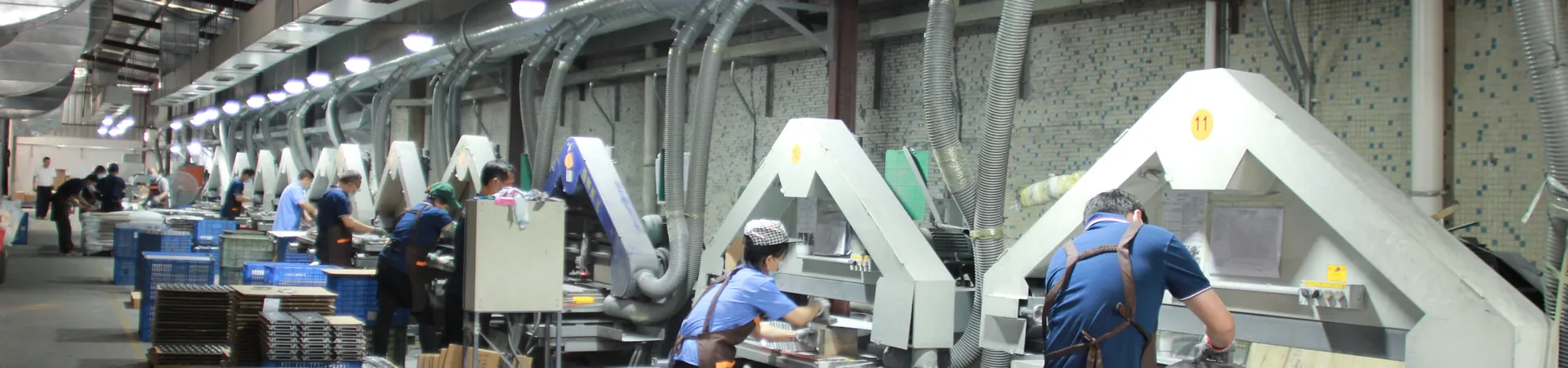
What IATF 16949 Means When You Buy Automotive Heat Sinks
Automotive buyers see the same certificate logos on every supplier website. Here is what IATF 16949 actually requires us to prove — and why it matters for your amplifier housing or battery cooling plate.
We hold IATF 16949 alongside ISO 9001 and ISO 14001. If you are sourcing an automotive aluminium component — a power amplifier heat sink, an amplifier housing, a battery cooling plate or a PTC heater module — here is what that actually buys you.
Traceability from billet to box
The standard requires that we can trace a finished automotive part back through its manufacturing history. That means material heat numbers, machine logs, operator records, in-process measurement data and inspection results are retained and retrievable.
Practically, if a dimension drifts on a shipment, we can isolate which production run caused it and which downstream parts are affected. Without this, a problem becomes a guess and a guess becomes a recall risk.
Documented control plans and PFMEA
For every automotive program we maintain a process flow diagram, a PFMEA (Process Failure Mode and Effects Analysis) and a control plan. These are not paperwork for its own sake — they define which dimensions are controlled, at which operation, with which gauge, and at what frequency.
This is the difference between inspecting quality in at the end and building it in as you go.
MSA and gauge discipline
Measurement systems analysis is a formal requirement. Gauges and instruments are calibrated on defined cycles, and we verify that the measurement system itself is capable of distinguishing good parts from bad before we rely on its numbers.
It sounds pedantic until you have a supplier decline to accept your measurement because their gauge reads differently from yours.
PPAP capability
For new automotive programs we support the Production Part Approval Process, including dimensional results, material and performance test results, process capability studies and sample parts. If your customer requires PPAP for the end assembly, your supply chain needs a manufacturer who can respond to it.
Why this matters specifically for heat sinks
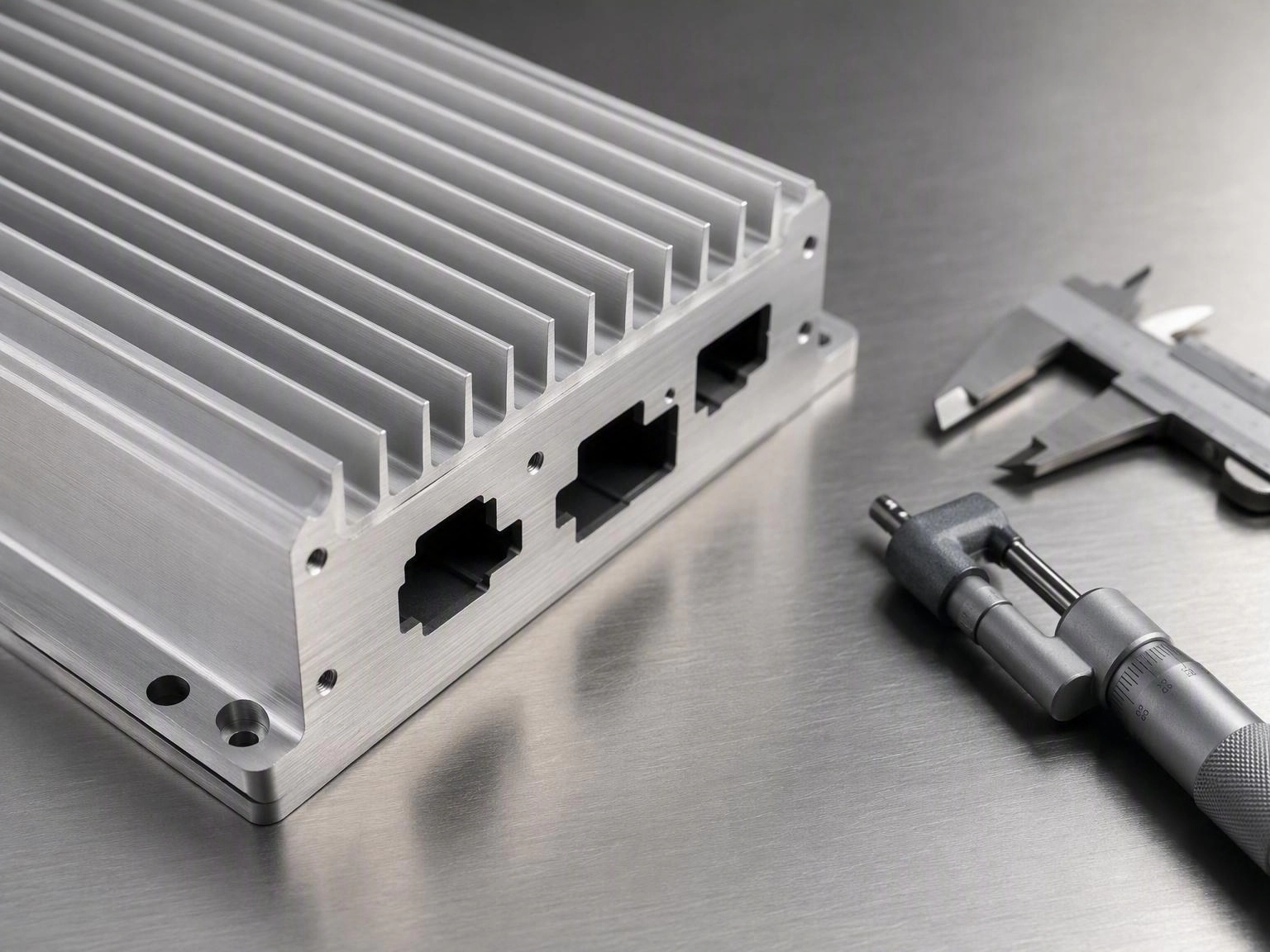
Thermal components are deceptively tolerance-sensitive. Fin thickness, fin spacing, base flatness and machined interface flatness all directly influence thermal resistance. A base that is 0.1 mm out of flat can leave an air gap under the device and destroy the very performance the part was designed for.
For automotive audio, the surface finish and dimensional consistency of an amplifier housing also affect assembly, sealing and appearance. These are exactly the characteristics that a control plan, a capability study and a calibrated gauge program are designed to hold.
What to ask any supplier
If you are evaluating automotive thermal component suppliers, these five questions separate a genuine automotive manufacturer from one with a logo on a wall:
- 1. Can you provide a control plan and PFMEA for this part?
- 2. Can you support a PPAP submission?
- 3. Can you trace a finished part back to its material heat number?
- 4. How are gauges calibrated, and can you show the MSA?
- 5. What is your change notification process if a process or sub-supplier changes?
We answer yes to all five, and we can walk you through the documentation during a supplier audit.
Planning an automotive aluminium program? Contact [email protected] with your drawing package and PPAP requirements, or book a factory visit in Dongguan.
Keywords: IATF 16949 heat sink supplier, automotive amplifier heat sink, automotive aluminium housing manufacturer, PPAP heat sink, automotive thermal component China