
What Separates a Premium Audio Panel from a Cheap One
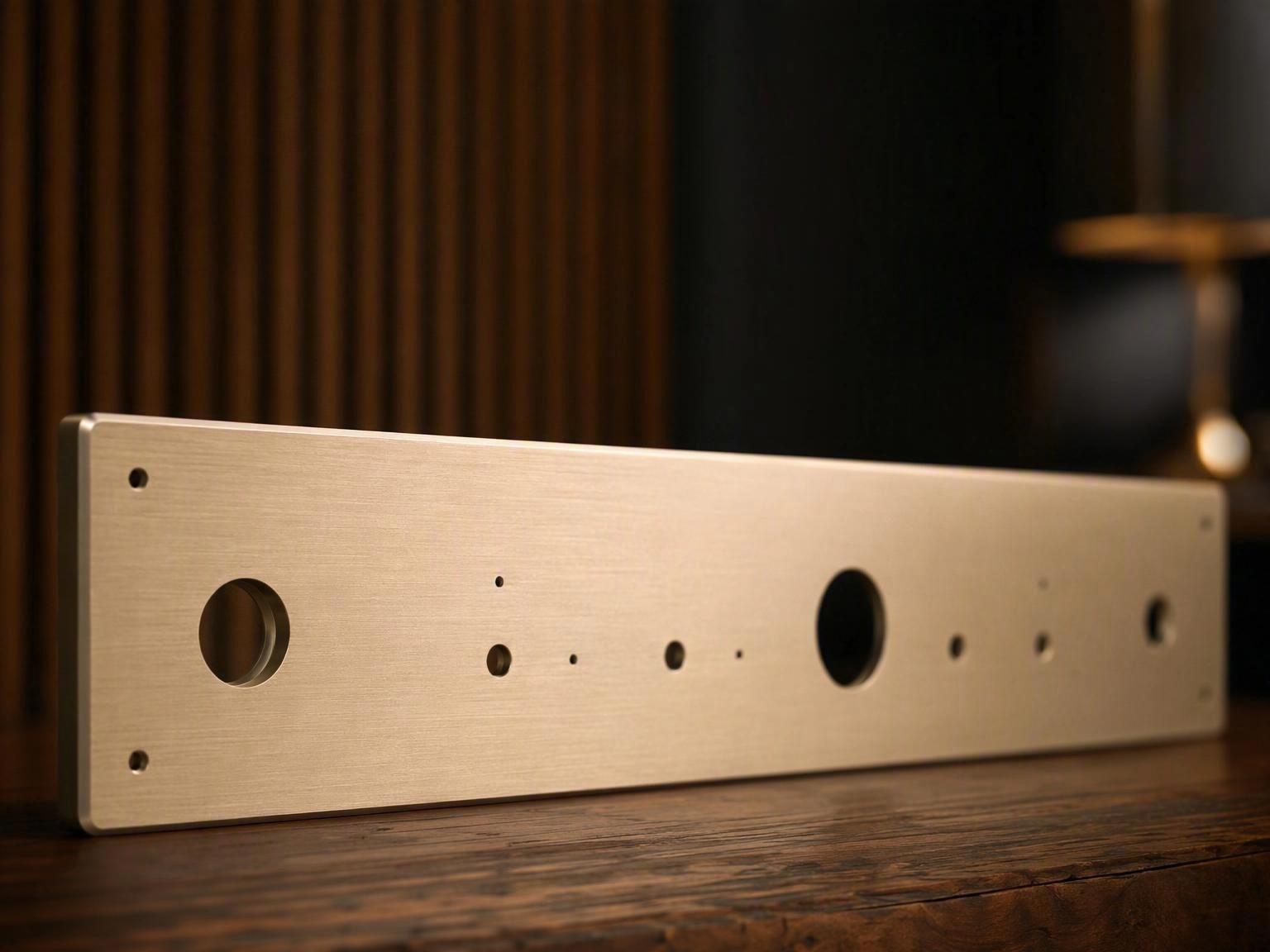
On a hi-fi amplifier, the front panel is the product's face. Hole position, grain direction, finish consistency and edge quality decide whether a unit reads as premium — or as a copy.
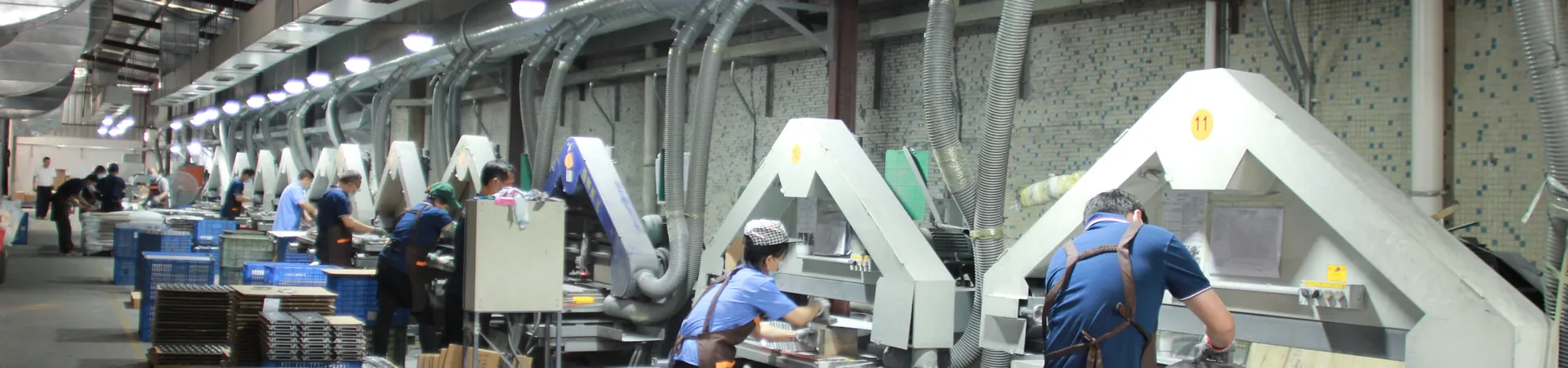
We have produced aluminium audio panels since 2020, alongside amplifier heat sinks and housings for automotive audio and home amplifier applications. Here is what actually differentiates a well-made panel from a cheap one.
Hole position and pattern consistency
An amplifier faceplate carries a specific hole pattern: input selector, volume knob bore, indicator LEDs, headphone jack, screw positions.
On a cheap panel, these holes are drilled with generous tolerance. The result is subtle but cumulative: knob gaps that vary in width, indicator LEDs sitting slightly off-axis, screw heads that do not sit flush. Individually negligible, collectively the difference between considered and careless.
Tolerance here is typically held to around ± 0.05 mm on hole position for critical features. That requires fixturing that holds the panel consistently across a production run — not a drill press and an operator's eye.
We machine panels on CNC machining centres with drilled, bored and tapped features as specified, and we inspect position with calibrated instruments and CMM for first article and critical dimensions.
Brushed grain direction
Brushed aluminium has a directional grain. On a faceplate, the grain should run consistently — usually horizontally, sometimes vertically, depending on the design intent.
Two problems occur in low-quality production. First, grain direction varies between panels in the same batch, so units in a rack do not match. Second, grain direction changes across a single panel where a second brushing pass crossed the first.
We brush panels with controlled direction and verify consistency, then apply clear anodizing to protect the grain from fingerprints and oxidation.
Finish consistency and colour matching
This is the most common source of customer complaint in audio components, and it is the hardest to control.
Anodizing colour depends on alloy composition, bath chemistry, current density, temperature, time and the surface condition before anodizing. Small variations in any of these shift the resulting tone — visible when two parts are placed side by side, particularly in champagne and gold tones which are far less forgiving than black.
Managing this requires process discipline: consistent alloy source, controlled bath parameters, and batch-level verification. When a customer needs a knob, a faceplate and a chassis to match, they must be anodized under comparable conditions — ideally in the same batch.
If you are sourcing anodized audio components, ask how colour consistency between parts is verified. A supplier who cannot answer has not dealt with the complaint yet.
Edge quality and chamfers
A premium panel has crisp, defined edges — usually with a small chamfer or radius to break the sharp corner and catch light.
Poorly produced panels show tool marks, inconsistent chamfer width, or burrs that were ground off rather than properly removed. On an aluminium panel, a burr is both a handling hazard and a visual defect.
Flatness
Large thin aluminium panels warp. If a panel is not flat, it does not sit flush against the chassis, gaps appear at the edges, and the unit looks poorly assembled.
Controlling flatness requires appropriate raw material, careful machining to avoid inducing stress, and controlled handling and packing. A panel that is flat on the bench can be bent by poor packaging before it reaches the customer.
Surface finish options for audio panels
We produce audio panels in a range of finishes:
- - Brushed + clear anodizing — the classic silver aluminium look
- - Brushed + colour anodizing — black, champagne, gold, bronze
- - Sandblasted + anodizing — soft matte appearance with consistent texture
- - Polished — satin or mirror, for a high-gloss presentation
- - Laser engraved — logos, model designations, control legends
- - Silkscreen printed — multi-colour graphics and markings
We also machine the matched parts that pair with a panel — heat sinks, chassis sections, speaker enclosures and control knobs — so that finish consistency is managed within one production system rather than negotiated between suppliers.
Why the supply chain matters here
A premium audio faceplate is a coordinated assembly of finish, dimension and appearance. If the panel comes from one supplier, the heat sink from another and the chassis from a third, all anodized independently, colour matching becomes an arbitration problem with no clear owner.
Manufacturing these parts in one facility — machining, brushing, anodizing, engraving — makes consistency a process decision rather than a negotiation.
Our end customers in this segment have included Yamaha, Harman, Pioneer, Focal, Audison, Alpine, Morel and KRK. That work requires documented process control, because a brand's appearance standard is not negotiable.
Developing an audio component? Send your panel drawing, finish reference and volume to [email protected].
Keywords: aluminium audio panel manufacturer, amplifier front panel CNC, brushed anodized faceplate supplier, hi-fi chassis manufacturer China, custom amplifier panel OEM