A Buyer's Guide to OEM Aluminium Components from China
How to evaluate, qualify and work with a Chinese aluminium manufacturing partner — from first enquiry to ongoing production, including the questions that reveal whether a factory is what it claims to be.
This guide covers the process from the buyer's side, based on what we see working and failing across our customer base.
Before you send an enquiry
Prepare four things. A supplier who receives all four can quote quickly and accurately; a supplier who receives one will ask for the rest and cost you a week.
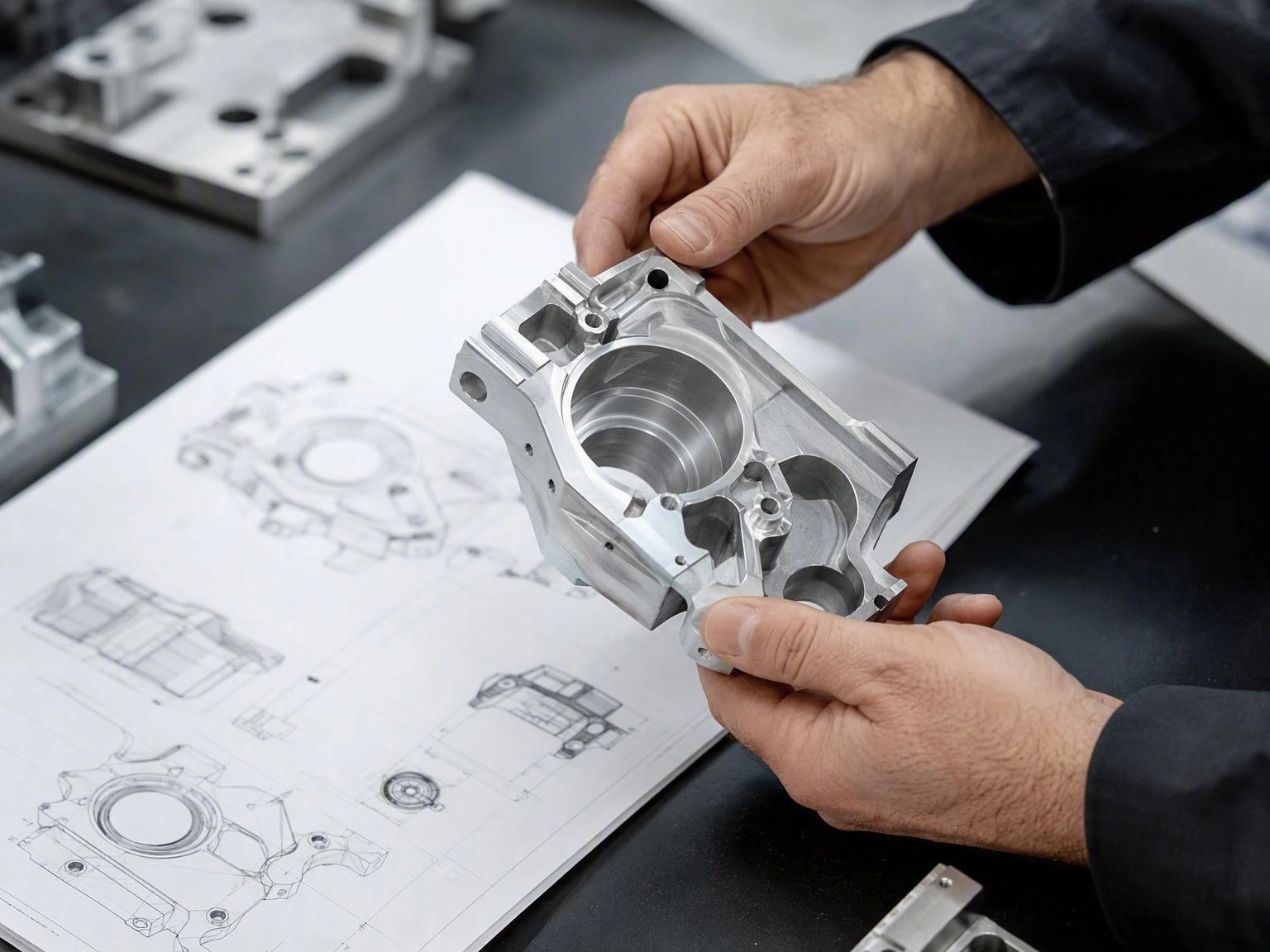
- 1. A drawing or 3D model. 2D drawings with tolerances are essential. STEP files help enormously for complex geometry. If you only have a sample, send it — but expect to discuss which dimensions are critical.
- 2. Material specification. Alloy and temper (for example 6063-T5, 6061-T6, or ADC12 for die casting). If you are unsure, say so and ask for a recommendation — a good supplier will suggest suitable alloys rather than just quoting the one you named.
- 3. Quantity. Prototype, sample order, annual volume and expected program lifetime. This drives the tooling and process decision more than any other input.
- 4. Critical requirements. Which tolerances are functional? Is there a cosmetic standard? Does the part need to be pressure-tight, food-safe or automotive-qualified?
Qualifying the supplier
Verify the legal entity. Ask for a business licence and confirm the registered company name matches the bank account name used for payment. A mismatch is a serious red flag.
Confirm the factory is theirs. Many "manufacturers" are trading companies. This is not automatically bad — a good trading company adds logistics and communication value — but you should know which you are dealing with, and it materially affects your cost and your control.
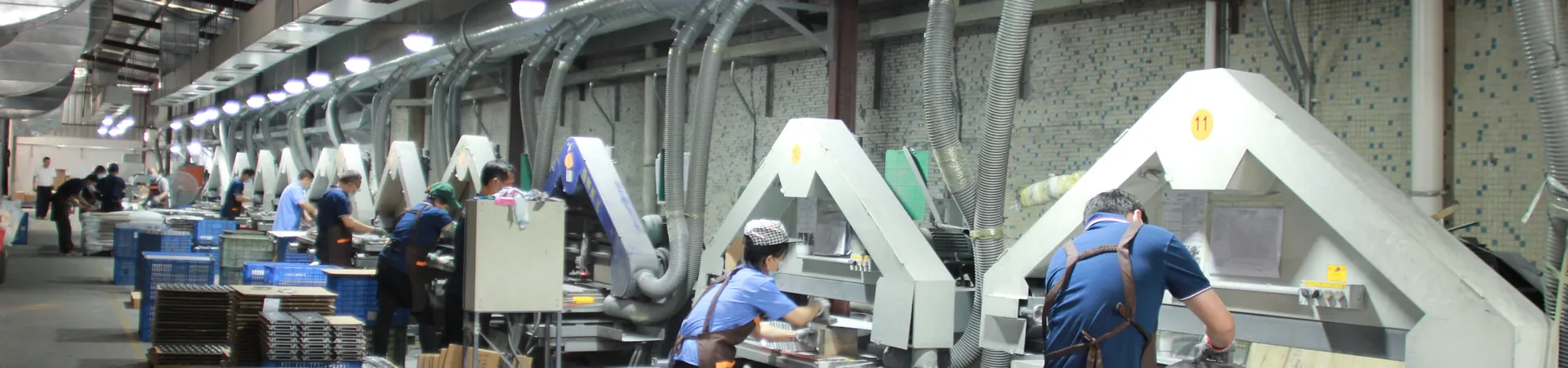
Ask for live video walkthroughs of the production floor rather than brochure photographs. Ask to see the specific machine that will run your part. If they cannot show you, be cautious.
Check certifications against the scope. A certificate is only meaningful if it covers the process you need. Verify that the ISO or IATF certificate is current and issued by a recognized body, and that the certified scope includes the relevant processes.
Ask about the process chain. Does the factory machine and finish in-house, or does it subcontract? We run extrusion, die casting, CNC, stamping, anodizing and coating in-house, which means fewer handovers and one accountable party. If your supplier subcontracts three of those steps, understand the risk that adds.
Request references in your industry. A supplier with experience in your application understands your constraints before you explain them.
A sample order that actually tests the supplier
Do not treat sampling as a formality. Structure it to reveal how the supplier performs.
Order samples through the normal production process, not hand-built by the engineering manager. This reveals whether the shop floor can hold the tolerance, not just the sample room.
Demand dimensional inspection data with the samples, and check it against the drawing yourself. The willingness and ability to produce a proper inspection report is a reliable signal.
Test the finish, not just the geometry. Check anodizing colour, grain direction, edge quality and any cosmetic criteria.
On a real sample order, deliberately ask for a small change. Nothing extensive — a revised hole position or a chamfer. How quickly and accurately they respond to a revision tells you how the relationship will work in production.
Ask about lead time in writing. Samples in 3–7 days is standard for us; get the number confirmed rather than assumed.
Structuring the relationship
Sign an NDA early. Any manufacturer receiving your drawings should sign one. We treat IP and drawing confidentiality as a baseline, and we sign NDAs before cooperation.
Agree Incoterms explicitly. FOB, CIF and DDP each shift responsibility differently. We ship by air, sea or express and support these terms — but the term must be in the quotation, not assumed.
Confirm payment terms. T/T is standard, with a deposit and balance against documents. Be clear about what triggers the balance payment.
Agree the quality acceptance criteria before production, including what happens if the parts do not conform. Our standard position is warranty support with return or replacement for genuine quality issues.
Establish a change control process. If the supplier changes a sub-supplier, a process parameter or a material source, you should be informed. Put this in writing for critical parts.
Communication
The most common failure in cross-border sourcing is not manufacturing quality. It is miscommunication.
- - Assign one contact on each side. Multiple contacts create dropped threads.
- - Confirm understanding in writing. After a technical discussion, send a written summary and ask for confirmation. This catches language gaps before they become production errors.
- - Respond quickly during production. Slow answers to shop-floor questions become delays.
- - Escalate early. Most delays are visible before they become critical. A supplier who tells you about a slip when it happens is more valuable than one who tells you at the deadline — provided they tell you.
What to expect from a good partner
A capable aluminium manufacturer will push back on you sometimes: flagging a tolerance that will be expensive to hold, recommending a different alloy, questioning a geometry that will not fill properly in a die. That pushback is a sign of competence, not obstruction.
We manufacture to your drawings — OEM and build-to-print. Our value is in doing that reliably, at scale and at a competitive cost, with export experience across North American, European, Japanese, Middle Eastern and Southeast Asian markets.
Ready to start? Send your drawing set to [email protected] for a quotation. Factory visits in Dongguan are welcome by appointment.
Keywords: OEM aluminium components China, Chinese aluminium manufacturer sourcing, custom metal parts supplier China, aluminium fabrication sourcing guide, factory audit aluminium supplier