
From Drawings to Delivery: How Our CNC Cell Handles Tight-Tolerance Aluminium
A look inside our CNC machining capability — what we hold, what we measure, and how a drawing becomes a repeatable part rather than a one-off that passes first article.
We have run CNC capability since 2010 and reached full process automation in 2013. Here is what that equipment set can do, and how we think about tolerances on aluminium parts.
The equipment
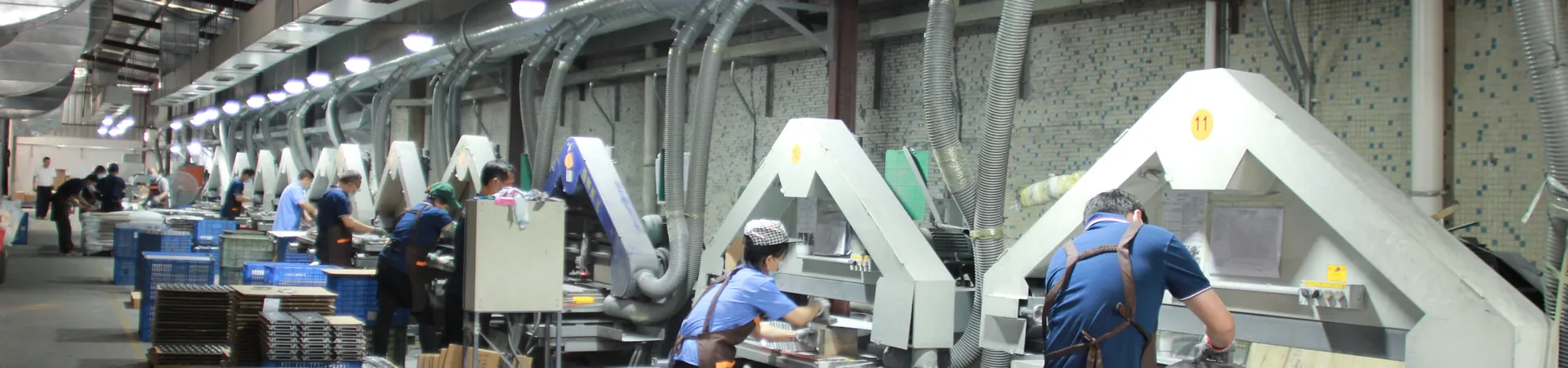
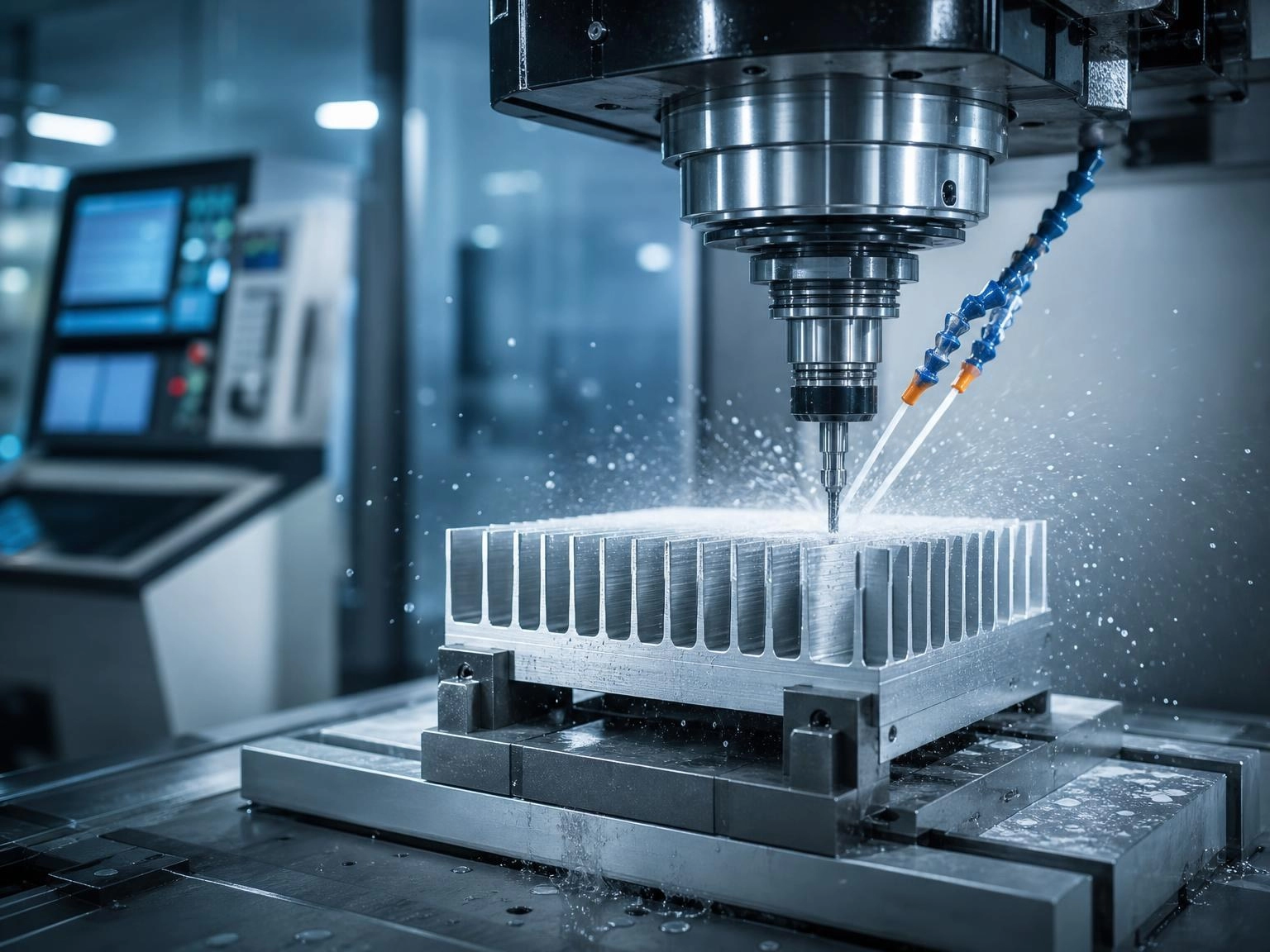
Our machining cell includes vertical machining centers, multi-spindle drilling and tapping machines, high-speed precision cutting equipment, and supporting lathes, milling machines, grinders and saws. Between dedicated CNC centers and our general fabrication shop, we operate more than 80 pieces of cutting, milling, drilling, tapping, bending, sawing and welding equipment.
For heat sink work specifically, the relevant operations are:
- - Facing and base flattening — establishing the mounting interface
- - Fin slotting and skiving — creating fin geometry to width and pitch
- - Drilling and tapping — mounting holes, threaded inserts, and clearance patterns
- - Profile cutting — cutting extruded lengths to drawing
- - Edge chamfering and deburring — removing handling hazards and improving coating adhesion
What "tight tolerance" means in aluminium
Aluminium is thermally reactive. It expands, it is soft enough to burr, and it is prone to distortion when thin sections are machined aggressively. A tolerance that is routine in steel can be genuinely difficult in a thin aluminium fin array.
As a general guide for our aluminium work:
| Feature | Typical achievable tolerance |
|---|---|
| Overall length / width | ± 0.10 mm |
| Machined base flatness | 0.05–0.10 mm |
| Hole position | ± 0.05 mm |
| Hole diameter | ± 0.03 mm |
| Fin thickness | ± 0.05 mm |
| Fin pitch | ± 0.05 mm |
| Surface roughness (machined) | Ra 0.8–1.6 µm |
Tighter values are achievable on specific features after review — the point is that we will tell you which features are realistic before quoting, not after the first article fails.
Why we control the process, not just the output
The reason we machine in-house rather than subcontracting comes down to how a tolerance is held over a production run.
A first article can be made to almost any tolerance by a careful operator. Holding that tolerance across 5,000 pieces requires the process itself to be stable — fixturing that does not shift, tooling that wears predictably, coolant and spindle speed controlled, and in-process measurement at defined intervals.
That is a process control problem, and it only works when machining sits inside the same quality system as everything upstream and downstream.
Inspection
Aluminium parts are inspected with calibrated instruments — calipers, micrometers, height gauges, pin gauges and CMM for complex geometry and first article inspection. Under our IATF 16949 system, measurement systems are verified for capability before their data is used for acceptance decisions.
For projects that require it, we provide dimensional reports and first article inspection reports with the shipment.
Common mistakes we see in drawings
Before you send a drawing, a few things are worth checking — not to criticize, but because they cause real cost:
- 1. Tolerancing every dimension to ±0.02 mm. Tight tolerances must be inspected. Over-tolerancing multiplies inspection cost with no functional benefit. Tolerance the features that matter.
- 2. Specifying sharp internal corners. A cutter has a radius. Call out the corner radius you can actually accept.
- 3. Ignoring fin geometry limits on extrusions. Very thin, very tall fins are an extrusion capability question as much as a machining one.
- 4. No datum strategy. A drawing without clear datums forces us to guess your functional alignment.
Send us your drawing and we will flag these before quoting.
Have a part to machine? Email [email protected] with your drawing or 3D model, material and quantity for a quotation.
Keywords: CNC machining aluminium China, heat sink CNC machining, precision aluminium machining supplier, CNC machined components OEM, tight tolerance aluminium parts