
Metal Stamping and Sheet Metal: When It Beats Machining
For the right part, stamping cuts unit cost dramatically compared to CNC machining. For the wrong part, it locks you into expensive tooling. How to tell the difference.
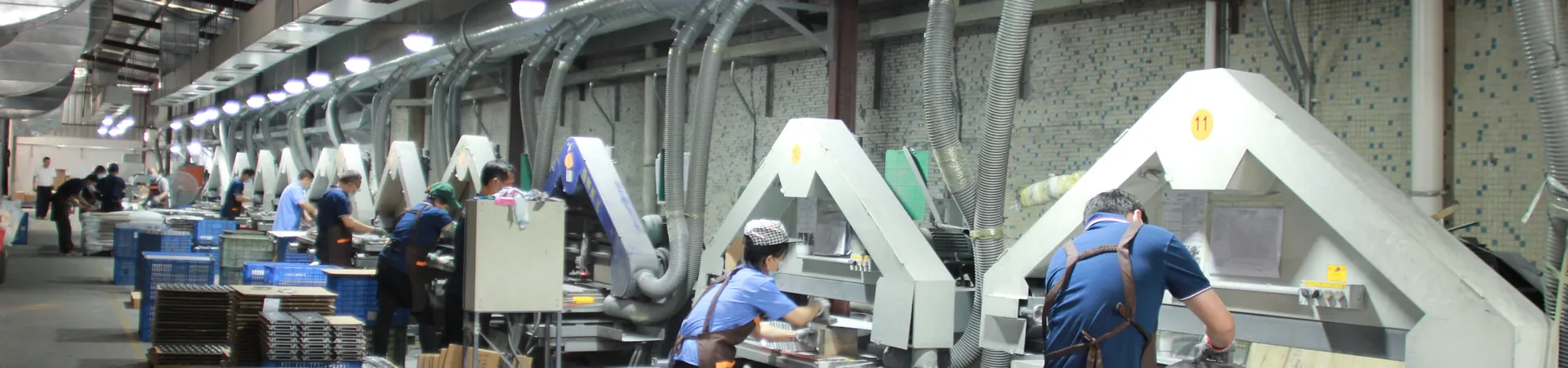
We run more than 80 pieces of cutting, milling, drilling, tapping, bending, sawing and welding equipment, plus a dedicated range of stamping presses. That lets us advise on the right process rather than defending the one we happen to own.
How stamping works
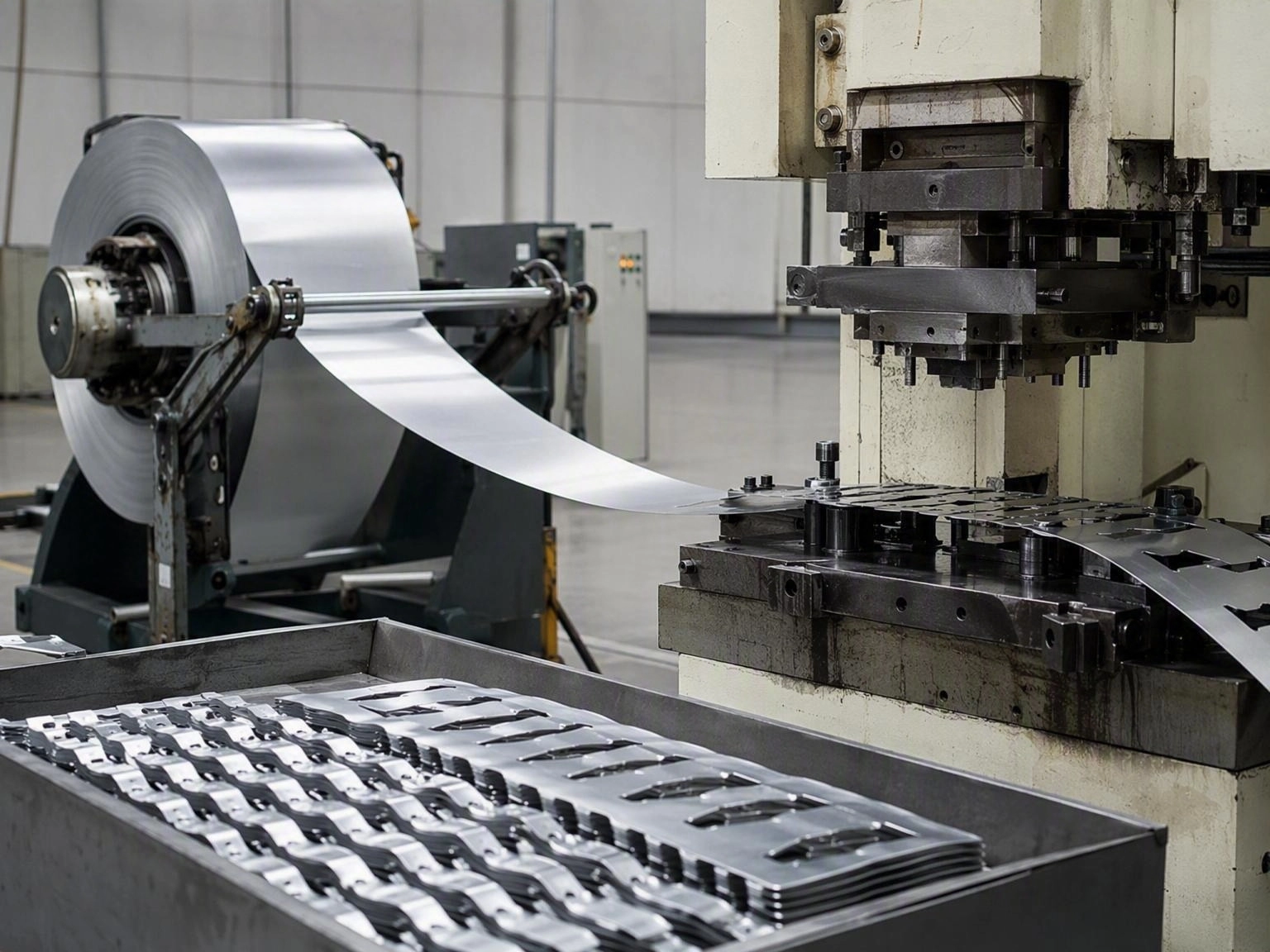
A stamping press forces a die against a sheet metal blank. A single stroke can pierce, blank, form, bend or emboss — and a progressive die performs a sequence of operations as the strip advances through the press.
The economics are distinctive:
- - Tooling cost: significant, and specific to the part
- - Unit cost: very low once running
- - Setup: the main cost driver is die design and manufacture
- - Volume sensitivity: extremely high
This is the opposite profile to CNC machining, where tooling cost is essentially zero and unit cost is driven by cycle time.
The break-even calculation
The decision comes down to a simple comparison:
- - Total cost of CNC = (unit cycle cost × quantity) + negligible tooling
- - Total cost of stamping = (unit cost × quantity) + die cost
Below a certain volume, CNC wins. Above it, stamping wins by a widening margin.
The exact crossover depends on part complexity, die cost and machining cycle time — frequently landing somewhere between a few thousand and a few tens of thousands of pieces. It is worth calculating rather than assuming, and it is a calculation we run for customers during quoting.
What stamping does well
Thin and medium gauge parts. Aluminium and steel sheet from thin gauges up to several millimetres.
Parts where material removal is wasteful. Machining removes metal and generates chips. Stamping forms the material, often with minimal waste — particularly with well-designed nest layouts.
Features that would be slow to machine. Arrays of holes, slots, louvers, ventilation openings and complex outer profiles are produced in a single press stroke. The same features on a CNC machine could take minutes per part.
High-volume flat and formed components. Brackets, mounting plates, covers, chassis panels, terminal strips and heat spreader plates.
Consistent parts with minimal operator dependency. Once a die is set and the press runs, output is highly repeatable — a genuine advantage over labour-intensive processes.
What stamping does badly
Low volumes. Die cost dominates and cannot be absorbed.
Thick sections. Above a certain thickness, press tonnage and die wear become impractical; casting or machining is better.
Tight tolerances across many features. Stamping holds tolerances well but typically not to CNC levels. If a feature needs ± 0.05 mm, expect a secondary machining operation.
Designs that will change often. Every geometry change modifies the die. Machining absorbs revisions at the cost of re-programming; stamping may require a new die.
Complex 3D geometry. Deep drawn or highly contoured forms add significant tooling complexity, and beyond a certain depth the process changes entirely.
The hybrid approach
The strongest results often combine both processes.
Stamping produces the blank, the primary form and the high-volume features — holes, slots, outer profile. CNC then machines the critical features: precision bores, tapped holes, flat sealing faces, or tight-tolerance datums.
This delivers most of stamping's unit cost advantage while preserving machining accuracy where it actually affects function. Because we run both processes in-house, we can design the split rather than handing you a part that requires two suppliers and a truck between them.
Design considerations for stamping
If you are designing for stamping, these constraints matter:
- - Minimum hole diameter relative to material thickness (a general guide is hole diameter no smaller than material thickness)
- - Edge distance from hole to edge, typically at least material thickness
- - Bend radius — minimum inside radius generally around material thickness for aluminium
- - Bend relief to prevent tearing at bend lines
- - Draft and clearance on formed features
- - Grain direction relative to bend lines to avoid cracking
Aluminium's formability varies by alloy — 5052 bends more readily than 6061. Alloy choice and bend radius should be decided together.
Secondary operations
Stamping rarely ends at the press. Typical follow-on operations include deburring and edge finishing, tapping, machining of critical features, surface treatment (anodizing, coating, plating), laser marking and assembly.
Running these in-house keeps the part under one quality system and one schedule.
Choosing between them: a summary
| Consideration | Favours stamping | Favours CNC |
|---|---|---|
| Volume | High | Low to medium |
| Geometry | Flat, formed, many holes | Complex 3D, tight tolerance |
| Material efficiency | Important | Not critical |
| Design stability | Frozen | Still evolving |
| Tolerance | Moderate | Tight |
| Cycle time | Critical | Not critical |
Have a part to evaluate? Send your drawing and annual volume to [email protected] and we will compare stamping, CNC and casting on total cost for your volume.
Keywords: metal stamping manufacturer China, sheet metal fabrication supplier, aluminium stamping parts OEM, progressive die stamping, custom metal brackets manufacturer